
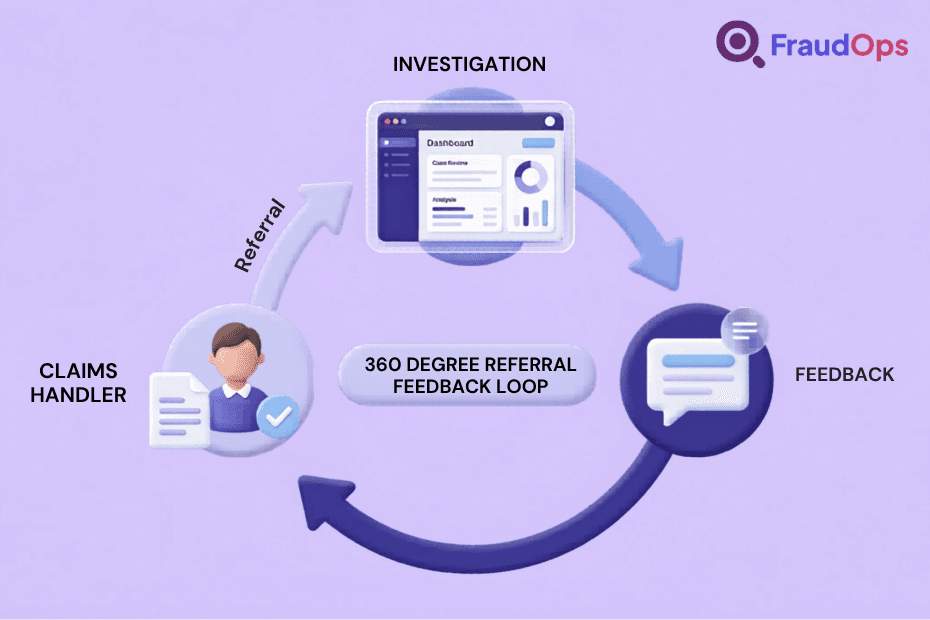
Claims handlers are often the first line of defence in identifying potential fraud, yet many operate without clear visibility into what happens after a referral is submitted. Decisions are made based on experience, instinct, and available data, but without structured feedback, there is little opportunity to refine those decisions over time. This is where the fraud referral feedback loop becomes important. By connecting investigation outcomes back to the people who raised the referral, insurers can gradually improve accuracy, reduce unnecessary investigations, and create a more consistent approach to fraud detection.
Why the Feedback Gap Matters
In many UK insurance organisations, referrals move into investigation teams and then effectively disappear from the perspective of the claims handler who raised them. The case may be confirmed as fraud, closed as genuine, or resolved with partial findings, but that outcome rarely makes its way back in a structured and useful format. Over time, this creates a gap in understanding. Claims handlers continue to refer cases based on what they believe is suspicious, but those beliefs are not shaped by real outcomes. This leads to patterns where some handlers become overly cautious and refer too many cases, while others become more selective and risk missing potential fraud. Both situations affect detection quality and create inconsistency across the organisation.
How the Fraud Referral Feedback Loop Improves Decision Making
A well structured fraud referral feedback loop changes how decisions are made at the point of referral. When claims handlers receive clear feedback on which cases resulted in confirmed fraud and which did not, they begin to adjust their judgement. Patterns start to emerge, and over time, the quality of referrals improves. This is not an instant transformation, but a gradual shift where each piece of feedback contributes to better understanding. The process also builds confidence, as handlers feel more informed about the outcomes of their decisions and more aligned with investigation priorities.
The benefit extends beyond individual performance. When feedback is consistent across teams, it creates a shared understanding of what constitutes a strong referral. This alignment reduces variation and helps standardise how fraud risks are identified across the organisation. As a result, investigation teams receive a more focused pipeline of cases, which improves efficiency and increases the likelihood of successful outcomes.
The Impact on Investigation Teams and Customers
The absence of a feedback loop does not only affect claims handlers. Investigation teams also feel the impact through increased workload and lower quality referrals. When a large number of cases entering the pipeline do not lead to confirmed fraud, investigators spend time reviewing and closing cases that offer limited value. This reduces the time available for higher risk investigations and can slow down the overall process.
Customers are affected as well. Genuine claimants may find themselves subject to investigation delays simply because their claim was flagged without sufficient evidence. This can create frustration and, in some cases, lead to complaints. By improving referral quality through a fraud referral feedback loop, insurers can reduce unnecessary investigations and provide a smoother experience for genuine customers.
What Effective Feedback Looks Like
For a fraud referral feedback loop to work, the feedback itself needs to be clear, consistent, and timely. Simply telling a claims handler that a case was closed is not enough. The feedback should explain why a case was considered genuine or fraudulent and highlight the key factors that influenced the decision. When this information is structured and easy to understand, it becomes actionable.
Timing also plays an important role. Feedback that arrives weeks or months after a case is closed loses relevance. When it is delivered closer to the conclusion of the investigation, it is easier for the handler to connect the outcome with their original decision. Over time, this creates a more effective learning cycle where each referral contributes to improved judgement.
Book a demo with FraudOps and see how it enables a 360-Degree Referral Feedback Loop. Connect investigation outcomes directly back to claims handlers with structured, automated feedback that improves referral quality and strengthens detection accuracy over time.
Challenges in Closing the Loop
Despite its benefits, many insurers struggle to implement a consistent fraud referral feedback loop. One of the main challenges is the way investigation outcomes are recorded. If results are captured in free text or inconsistent formats, it becomes difficult to extract meaningful insights and share them with claims teams. Another challenge is time. Investigation teams are often under pressure to manage high workloads, which means feedback can be seen as an additional task rather than an integrated part of the process.
There is also the issue of system connectivity. When claims and investigation systems operate separately, sharing information becomes more complex. Without the right tools in place, even well intentioned efforts to provide feedback can become difficult to sustain.
Why Technology Makes the Difference
This is where technology plays an important role in making the fraud referral feedback loop practical and scalable. With the right platform, investigation outcomes can be captured in a structured way and automatically shared with the relevant claims handlers. This removes the need for manual effort and ensures that feedback is delivered consistently.
Technology also allows organisations to analyse feedback data over time. By looking at patterns across referrals and outcomes, insurers can identify trends and refine their detection strategies. This creates a continuous improvement cycle that strengthens fraud detection accuracy and supports better decision making across teams.
Final Thoughts
The fraud referral feedback loop is a simple concept, but its impact on detection quality is significant. By closing the gap between referral and outcome, insurers can create a more informed and consistent approach to fraud detection. Claims handlers gain clarity, investigation teams receive better quality cases, and customers benefit from fewer unnecessary delays. Over time, this leads to stronger performance and a more efficient use of resources. Improve referral quality with FraudOps 360-Degree Feedback. Turn every investigation outcome into actionable insight, reduce low quality referrals, and build a consistent fraud referral feedback loop across your organisation.