
98,400 fraud claims detected across the UK in 2024. Up 12% on the year before. £1.16 billion in fraudulent claims identified, according to the ABI’s November 2025 report.
By any measure, detection is working. So why is the referral backlog at most SIUs still growing?
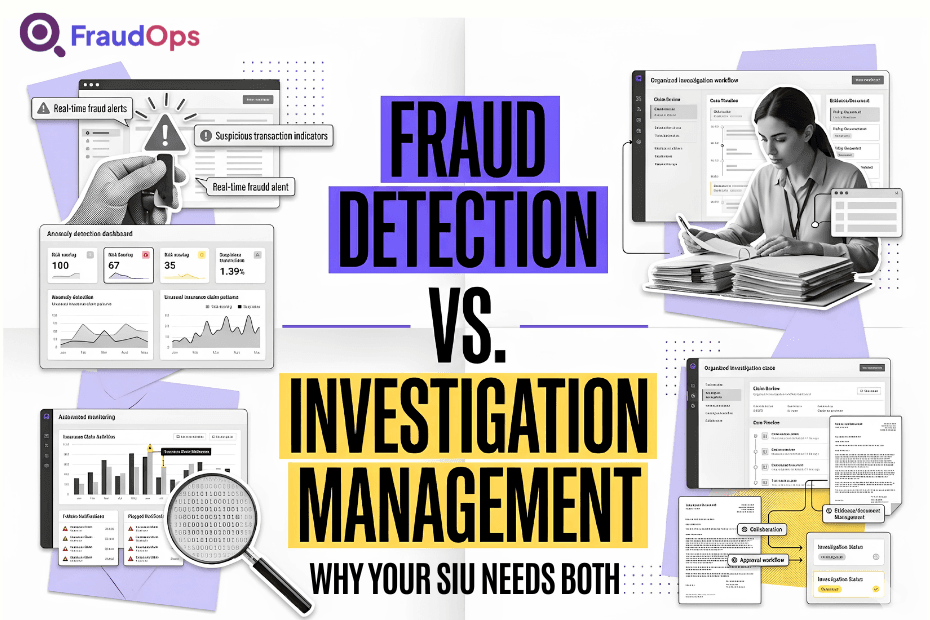
The answer, almost always, is this: detection and investigation management are two different jobs. The industry has invested heavily in one. The other is still largely being done with spreadsheets and shared inboxes. Let’s understand the difference between fraud detection vs. investigation management and why both are of utmost importance in tackling insurance fraud today.
What Fraud Detection Actually Does
Fraud detection sits at the front end of the fraud process. Its role is to identify activity that may require closer review by applying rules, scoring models, data analysis, and behavioural indicators to claims activity.
Detection systems help insurers identify suspicious patterns earlier in the claims journey. They often analyse policy data, claimant behaviour, claims history, network connections, and external intelligence sources to determine which cases should be referred for investigation.
Several core functions usually sit within detection systems:
• Alert generation: Detection platforms identify suspicious activity and generate referrals based on predefined risk indicators.
• Risk scoring: Claims receive fraud scores that help determine investigation priority and referral likelihood.
• Pattern analysis: Detection engines analyse claims data to identify anomalies, linked entities, or unusual behavioural activity.
• Referral routing: Suspicious cases are directed toward fraud investigation teams for further review.
This stage is extremely important because it helps insurers identify fraud risk efficiently. However, detection itself does not investigate claims or manage operational workflows once referrals reach the fraud team.
This distinction is where confusion around fraud detection vs investigation management often begins.
What Investigation Management Actually Means
Once a suspicious referral enters the fraud team, the work changes completely. Investigators now need to review evidence, prioritise workloads, manage case progression, document activity, monitor timelines, and coordinate operational decisions.
This is where investigation management becomes critical.
Investigation management focuses on the operational handling of referrals after alerts have already been generated. It supports the day to day workflow that allows fraud teams to progress cases efficiently and consistently.
A strong investigation process usually includes:
• Case management: Investigators need structured workflows to track referrals, actions, evidence, and outcomes across the investigation lifecycle.
• Workflow visibility: Managers require oversight into workloads, case ageing, bottlenecks, and operational performance.
• Evidence handling: Teams need a structured way to collect, organise, and review investigation material.
• Outcome tracking: Fraud operations need visibility into how referrals convert into retained claims, confirmed fraud outcomes, or legitimate closures.
This is the operational space where post alert insurance investigation management becomes essential because referrals still need to move through a controlled and efficient investigation process after detection has already taken place.
Why Detection Alone Does Not Solve Operational Problems
One of the biggest misconceptions across insurance fraud operations is the belief that improving detection automatically improves fraud outcomes. Detection can increase referral volumes successfully, though operational strain often grows if investigation processes remain fragmented.
Fraud teams frequently experience situations where alerts increase rapidly while operational capacity struggles to keep pace. Investigators may spend excessive time moving between systems, reviewing spreadsheets, gathering evidence manually, and managing workloads without clear operational visibility.
This creates bottlenecks after the detection stage. Strong detection capability can still lead to poor operational outcomes if fraud teams lack efficient investigation workflows.
Several operational issues commonly appear when investigation management is weak:
• Referral backlogs: High alert volumes can overwhelm teams if workflows are not structured effectively.
• Case delays: Investigators may struggle to progress referrals quickly due to fragmented systems and manual processes.
• Operational blind spots: Managers may lack visibility into ageing cases, workload pressure, and investigation performance.
• Inconsistent workflows: Different investigators may manage referrals differently without structured case management processes.
This explains why understanding fraud detection vs investigation management matters operationally. Detection identifies risk, while investigation management determines how effectively teams convert referrals into outcomes.
The Post Alert Gap Many Teams Overlook
The space between alert generation and confirmed fraud outcomes is often where operational friction becomes most visible. Detection tools can generate referrals successfully, though the investigation process itself still determines how efficiently fraud teams progress cases.
This is sometimes referred to as the post alert gap. Once alerts enter the fraud workflow, investigators need operational systems capable of supporting active investigations rather than simply displaying fraud scores.
This is where post alert insurance investigation management plays a central role because investigators need much more than referral alerts to manage cases effectively. They require operational workflows, evidence handling, case progression tools, communication tracking, and investigation oversight throughout the lifecycle of the referral.
Without structured investigation management, fraud teams can struggle with delays, inconsistent reporting, and limited operational visibility even when detection systems perform well technically.
Why SIU Teams Need Dedicated Investigation Workflows
Special Investigation Units manage highly operational workloads that require coordination, oversight, and structured case progression. Investigators often handle multiple active referrals simultaneously while balancing service expectations, evidence reviews, reporting requirements, and operational deadlines.
This is why dedicated SIU case management software UK operations increasingly rely on purpose built investigation workflows rather than generic claims systems or spreadsheets.
Investigation workflows help fraud teams standardise how referrals move through the pipeline. They create consistency around evidence gathering, review processes, escalation handling, and outcome recording.
Several operational benefits become clear when fraud teams use structured investigation management systems:
• Central visibility: Teams gain a single operational view across referrals, evidence, actions, and outcomes.
• Workflow consistency: Investigations follow structured processes that improve operational control and reporting quality.
• Case prioritisation: Teams can identify urgent referrals, ageing investigations, and workload pressure more effectively.
• Management oversight: Operational leaders gain better visibility into investigation performance and team capacity.
Strong SIU case management software UK workflows support both investigators and managers because operational visibility improves across the entire fraud process.
Why Fraud Detection and Investigation Management Work Together
Fraud detection and investigation management should not compete against each other because they address completely different operational requirements. Detection systems identify suspicious activity, while investigation platforms manage the operational process that follows.
The relationship works best when both systems support each other closely. Detection tools generate structured referrals, while investigation management systems provide the workflows and oversight needed to progress those referrals efficiently.
This combined approach creates stronger operational continuity because fraud teams can move smoothly between alert generation, case handling, evidence review, and outcome tracking without relying heavily on disconnected systems.
Why Operational Visibility Matters So Much
Fraud investigations involve moving operational parts across referrals, workloads, timelines, evidence, and reporting. Without clear visibility, fraud teams can struggle to understand where delays are building or where operational pressure is increasing.
Strong investigation management systems provide operational insight into active workloads rather than simply displaying fraud alerts. Managers can monitor referral ageing, investigation progression, workload distribution, and case outcomes continuously.
This is one reason fraud investigation workflow software is becoming increasingly important across UK insurance fraud operations because operational efficiency depends heavily on visibility after referrals enter the investigation process.
The ability to monitor active investigations clearly often determines how efficiently fraud teams convert alerts into measurable outcomes.
The Bottom Line
Understanding the difference between detection and investigation management is essential for building effective fraud operations. Detection systems help insurers identify suspicious activity early, though they do not manage the operational work required after referrals reach fraud teams.
The reality behind fraud detection vs investigation management in UK operations is that both functions are necessary and they solve different problems within the fraud lifecycle. Detection identifies risk, while investigation management helps teams progress referrals, manage evidence, monitor workloads, and convert investigations into outcomes efficiently.
Fraud teams perform best when both systems work together as part of a connected operational process. Detection creates visibility into suspicious activity, while investigation management creates structure, oversight, and operational control throughout the investigation lifecycle.
See how FraudOps helps UK insurance fraud teams manage post alert investigations with structured workflows, operational visibility, case management, and investigation oversight designed specifically for modern SIU operations.