
Over half of the respondents surveyed recently by Insurance Post and CRIF use AI driven fraud detection software, and adoption continues to grow. Detection tells an insurer which claims deserve a closer look, but the work of gathering evidence and recording a fair, defensible outcome happens afterwards, in what we call the investigation layer. With UK insurers detecting £1.34bn of fraudulent claims in 2025, the quality of that second step matters as much as the first.
Key Takeaways
- 52% of respondents to the Insurance Post and CRIF fraud survey already use AI driven fraud detection tools (Insurance Post).
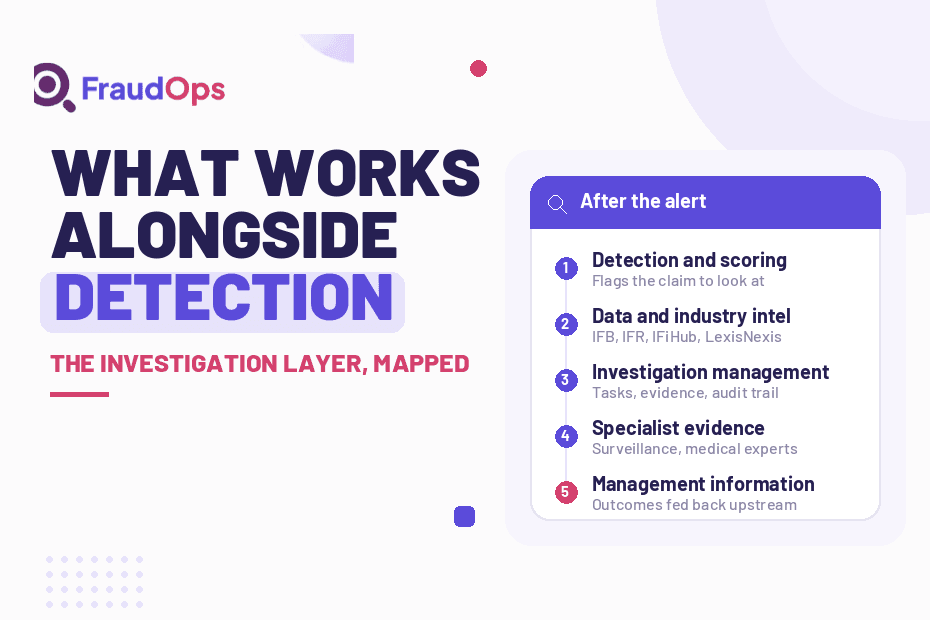
- The investigation layer is the set of tools and processes that sits after fraud detection software and turns a flagged claim into a decision, covering case management, intelligence gathering, evidence, decision records and outcome reporting.
- The ABI reported £1.34bn of detected fraudulent claims in 2025, with an average of £14,300 per claim (Insurance Business).
- 99% of insurers in Verisk’s 2026 study say they have come across manipulated or AI altered documentation (Verisk).
What Fraud Detection Software Does Well
You can think of fraud detection software as your early warning system. It looks through large numbers of claims and applications and points out the ones that seem risky, using things like scoring models, network analysis, voice risk analysis, document checks and shared industry data such as the Insurance Fraud Bureau’s intelligence. Plenty of insurers already rely on it. In the Insurance Post and CRIF survey, 52% of respondents use AI driven detection tools and 87% think AI driven detection will be one of the most important developments of the next five years (Insurance Post), and Gallagher Bassett’s 2026 Carrier Report found that 67% of North American carriers now use generative AI to spot fraud (Claims Journal). The catch is that a score or an alert can only tell you where to look, because a person still needs to work out what really happened and explain why the outcome is fair.
What Happens After the Alert
Once a claim gets flagged, an investigator picks it up. They pull the claim details together, run checks across different data sources, go through documents and photos, talk to the people involved where it makes sense, and then reach a decision they can explain later. In a lot of insurers, that investigation workflow is still scattered across emails, spreadsheets, shared drives and the claims system, so the alert lives in one place, the evidence in another and the decision somewhere else again, which makes it hard to see how a case has moved along, who did what, or how much the investigation actually saved. Timing can make things trickier too. Carpe’s 2026 Online Fraud Insights Report found that only 35.7% of its referrals came up within two months of the reported loss, with nearly two thirds arriving later (Claims Journal), so your team needs to be able to pick those cases up quickly with the whole story in front of them.
The Investigation Layer Explained
So what exactly is the investigation layer? Put simply, it is the set of tools and processes that sits after your fraud detection software and helps your team turn a referral into a decision, so it does not replace detection but makes those alerts genuinely useful.
Case Management
Every referral becomes a case with a clear owner, status, priority and timeline, so managers can see who is working on what and investigators know what to do next. Good fraud case management also makes handovers between claims, the SIU and legal teams easy to follow, instead of leaving them buried in email threads.
Intelligence Gathering
Investigators need quick access to the data that confirms or rules out suspicion, such as credit reference agencies, Companies House, DVLA records and industry fraud data. When those checks happen inside the case, your team spends less time searching and the results stay right next to the evidence.
Evidence and Decisions
Photos, documents, notes and interview records should all sit together, linked to the decisions they support. This really matters for fairness, as the Financial Ombudsman Service upheld 35% of the 13,420 car and motorcycle insurance complaints it received in 2025/26 (Financial Ombudsman Service), and a clear record is what lets you show your reasoning if a decision is ever questioned.
Outcome Feedback
When you record outcomes against every referral, you can see which alerts turned into confirmed fraud and which did not. That helps you fine tune your fraud detection software over time, and it gives you clear numbers to share with the board.
Why the Investigation Layer Matters More in 2026
The latest data gives three good reasons to pay attention to this part of the process. Fraud values are going up, with the ABI reporting an average detected fraudulent claim of £14,300. Evidence is getting harder to trust, as Verisk found that 66% of insurers believe digital media fraud goes undetected often or very often across the industry. Teams are also stretched, with 49% of Insurance Post and CRIF respondents saying technology limitations and resource constraints are their biggest barriers to tackling fraud. With all of that going on, your counter fraud technology budget cannot simply go on more fraud detection software, because the real value comes from turning alerts into confirmed outcomes.
What to Look For in an Investigation Layer
Every insurer’s setup is a little different, but a few things make a big difference when you are choosing counter fraud technology for this part of the process.
- Works With Detection: It should pick up alerts from the fraud detection software and data sources you already use, so you do not have to replace anything.
- One Case Record: Every referral, check, document and decision should live in one place, so your investigation workflow never relies on digging through email.
- Investigator Led: AI and automation should take care of research and admin, while your investigators steer the case and make every decision.
- Full Audit Trail: Every action should be recorded automatically, so you can explain any decision to customers, the Ombudsman or regulators.
- Clear Outcomes: Results should be captured against each referral, so you can report savings with confidence.
Frequently Asked Questions
It is the set of tools and processes that comes after fraud detection and helps your team turn a flagged claim into a decision. It covers case management, intelligence gathering, evidence handling, decision records and outcome reporting.
Not at all. Detection tools point out which claims look risky, but investigators still gather the evidence, weigh it up and decide what happens. Good fraud detection software simply helps them spend their time in the right places.
Because they do different jobs. Detection finds suspicious claims at scale, while fraud case management and investigation tools help your team confirm or clear those claims and record a fair decision.
When you record the outcome of every referral, you can see which alerts led to confirmed fraud. That feedback helps you tune your detection rules and models over time.
FraudOps is an AI powered investigations workbench for insurance fraud teams, and it sits right after detection. It connects to risk scoring tools such as Clearspeed and data sources including LexisNexis, Experian, Companies House, DVLA and the IFB. Your team can also forward an email alert or paste a screenshot from your core system to create a case, and investigators stay in charge of every case with a full audit trail behind them.
Bottom Line
Good fraud detection software tells an insurer where to look, and the investigation layer is where flagged claims become confirmed outcomes, fair decisions and measurable savings. For insurers already investing in detection, the practical next step is to make sure every alert lands in a single, auditable case record where investigators can work it efficiently and the result feeds back into the next round of detection. If you would like to see how FraudOps gives your investigators that single case record alongside the detection tools you already use, book a demo with FraudOps.