
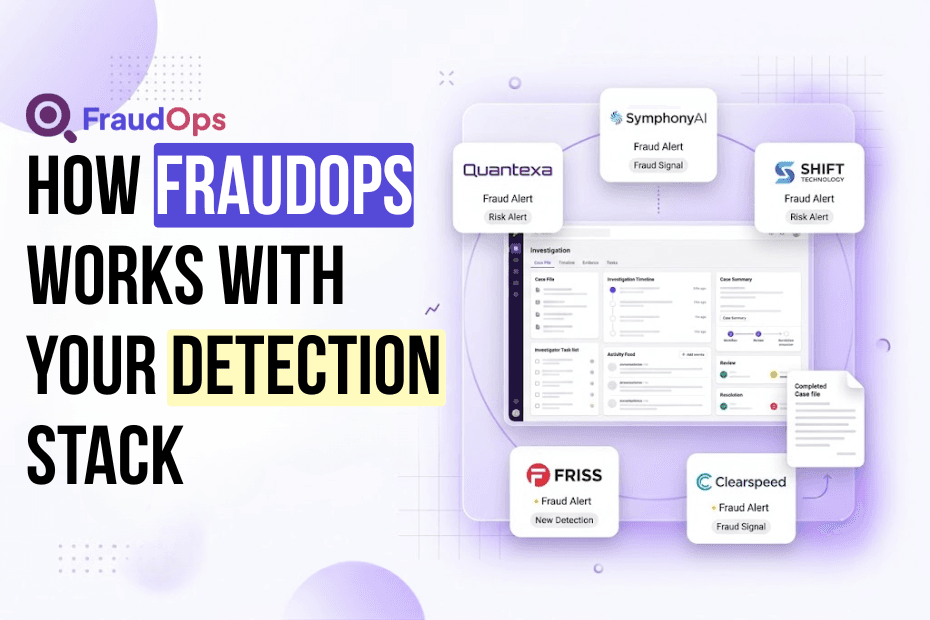
FraudOps works alongside your existing fraud detection stack, not instead of it. Scores and alerts from Quantexa, Symphony AI, Shift Technology, FRISS and Clearspeed flow into FraudOps cases; enriched case data and outcomes flow back to sharpen the models. Integration is API-based — with AI-led alternatives — and teams go live in weeks, not quarters.
Detection and investigation are different layers
Your detection investment answers one question: which claims deserve a closer look. FraudOps answers everything after that — who works the referral, what evidence is gathered, how decisions are recorded, and what the operation saved. Keeping the layers separate but connected means you keep the detection tools your team has already tuned, and add the operational layer most stacks are missing.
What flows in: scores, alerts and referrals
FraudOps ingests detection output through direct API connections — fraud scores and alerts from Quantexa, Symphony AI (NetReveal), Shift Technology and FRISS, voice-risk scores from Clearspeed, and lookups against industry sources such as the IFB and IFR. Each lands in a structured referral queue with the context an investigator needs on day one.
What flows back: outcomes that make detection sharper
The loop closes in the other direction. Investigation outcomes, confirmed fraud markers and enriched entity data feed back to your detection models and industry databases — including automated outcome reporting built with a Tier 1 UK insurer. Referrers get structured 360° feedback on every referral, which measurably improves referral quality over time.
No detection platform? Start with Rapid Screen
For insurers and TPAs screening FNOL claims or applications manually, Rapid Screen adds a lightweight, governed screen at the top of the funnel: it extracts the parties on each record, runs identity, voice-risk, industry-database and claims-history checks through your existing vendor contracts, and returns risk signals to the handler. It is a lightweight detection layer, not an enterprise model — and it means no claim goes unscreened while your stack matures.
Why integration takes weeks, not quarters
Traditional fraud tech deployments stall on integration projects. FraudOps offers five intake routes — direct REST API, inbound email with AI extraction, screenshot ingestion that reads a legacy system’s screen, bulk CSV/Excel, and manual entry — four of which need zero IT involvement. That is why new customers, including a UK TPA, have gone live in weeks.
Frequently asked questions
Does FraudOps compete with Quantexa or Shift?
No. They solve detection; FraudOps solves investigation management. FraudOps is integration-ready with these platforms and positions them as partners in the same counter-fraud stack.
Which claims systems does FraudOps connect to?
Guidewire and similar core platforms via API, built to your workflow and events — referrals in, outcomes written back — with AI screenshot ingestion as a fast-start alternative where a legacy system has no practical API.
Do we keep our existing vendor contracts?
Yes. Credentials for LexisNexis, Experian, Clearspeed and others are managed centrally inside FraudOps, and it orchestrates the calls under your existing agreements.
Conclusion
The strongest counter-fraud operations treat detection and investigation as one connected system. FraudOps is the fraud case management and investigation software that completes that system — plugging into the detection stack you already trust and turning its output into worked cases and evidenced savings. Book a demo to see it running against your stack.