
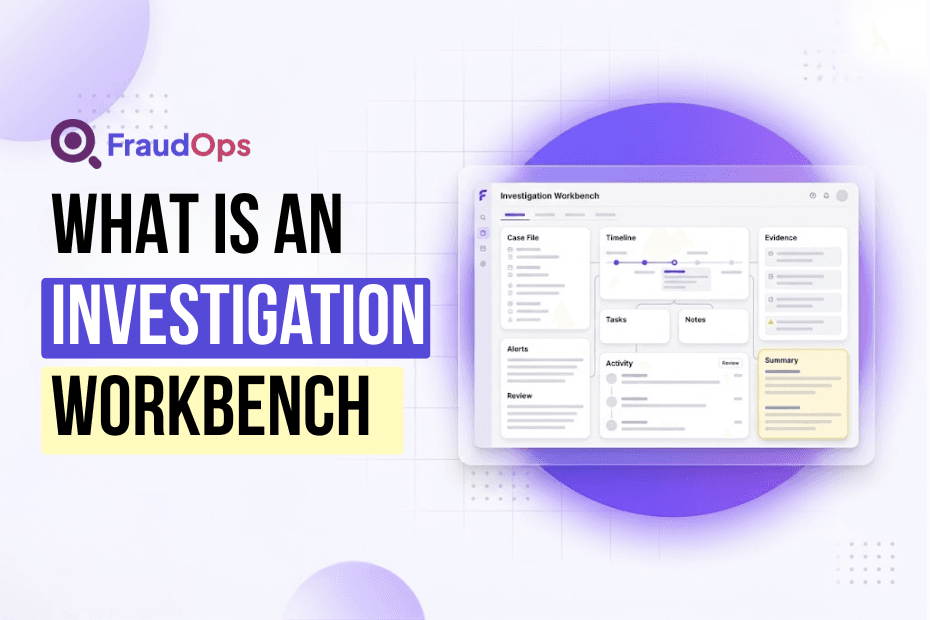
An investigations workbench is a single working environment where fraud investigators manage everything a case needs — referrals, tasks, evidence, intelligence searches, decisions and outcomes — instead of switching between spreadsheets, inboxes and separate portals. In insurance, it is the operational layer of fraud case management and investigation software, sitting downstream of detection systems.
What an investigations workbench includes
A complete workbench covers structured referral intake and triage; case lifecycle management with checkpoints and SLA tracking; evidence handling with chain of custody; intelligence records with entity matching and watchlist alerts; connected data lookups from inside the case; and reporting that turns casework into savings, conversion and capacity figures. Modern workbenches add AI assistants for document reading, data gathering and case summaries — with a human making every determination.
Workbench vs case management vs detection
The terms overlap. Case management” is the record-keeping core; a workbench is broader — the investigator’s whole working surface, including intelligence and automation. Detection software is a different layer entirely: it finds suspicious claims, while the workbench manages what happens next. Detection vs investigation management explains the split.
Frequently asked questions
Who uses an investigations workbench?
Investigators and intel analysts day to day; SIU managers for workload and quality oversight; Heads of Fraud for MI. In insurance that spans insurers, TPAs and specialist investigation firms.
Is an investigations workbench the same as an SIU platform?
Broadly, yes — “SIU case management software” and “investigations workbench” describe the same category from different angles. FraudOps, for example, is an AI-powered investigations workbench for insurance fraud teams.
Conclusion
An investigations workbench gives fraud teams one governed place to work — the difference between tracking investigations and running them. See it in practice in the FraudOps investigation case management overview.